Making the footprint of AI coding visible
I built Tend because I wanted to understand the energy, carbon, and water associated with my Claude Code usage.
Tend reads usage records on your computer and estimates the footprint of each project. It then helps you find carbon removal and water restoration providers and keep a record of what you fund.
I designed and built the tool, its website, and the badges that let people share those estimates alongside their work.
- Role
- Product design and development
- Made with
- Node.js · Claude Code
- Status
- Live, v1.0
- When
- 2026
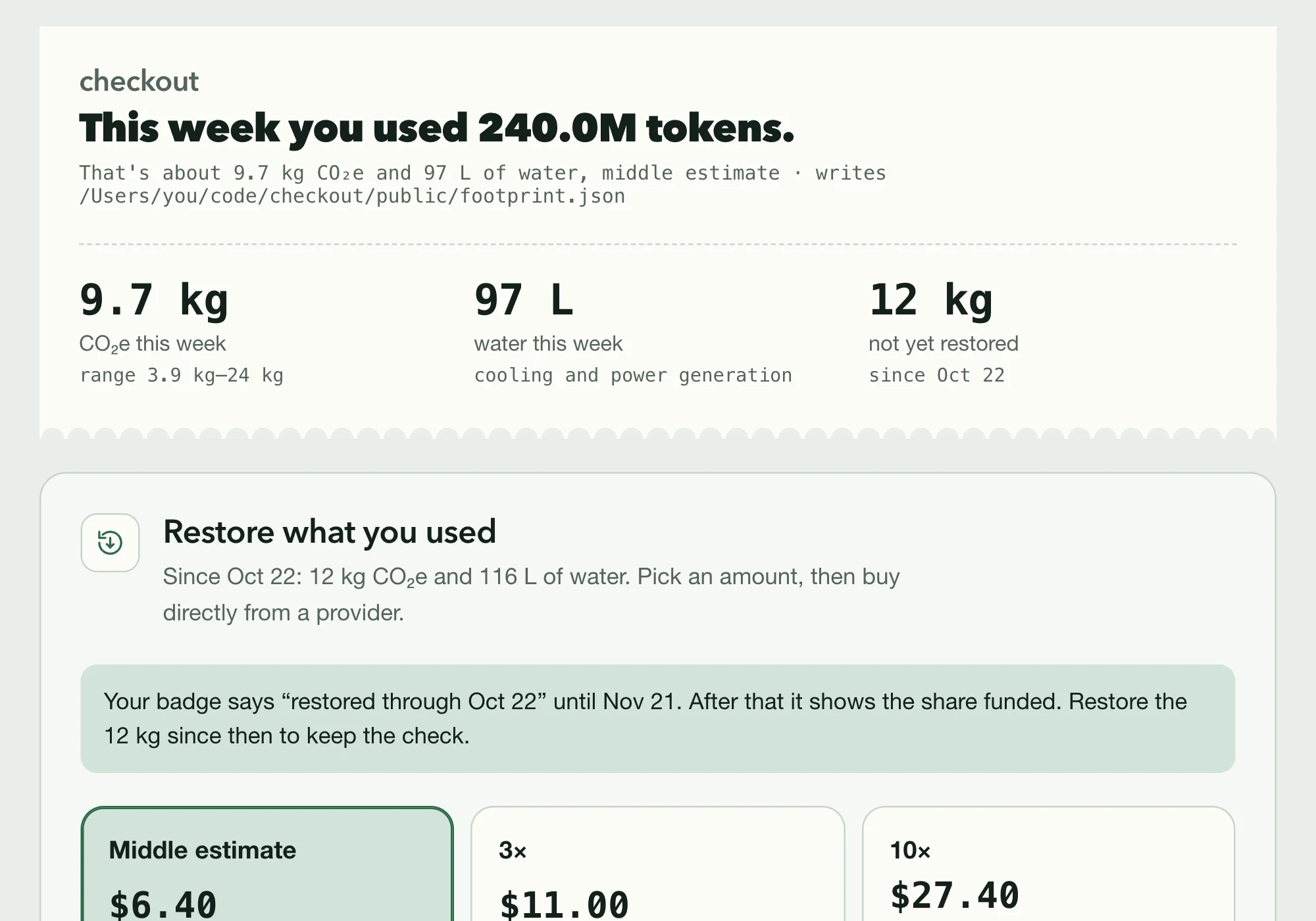
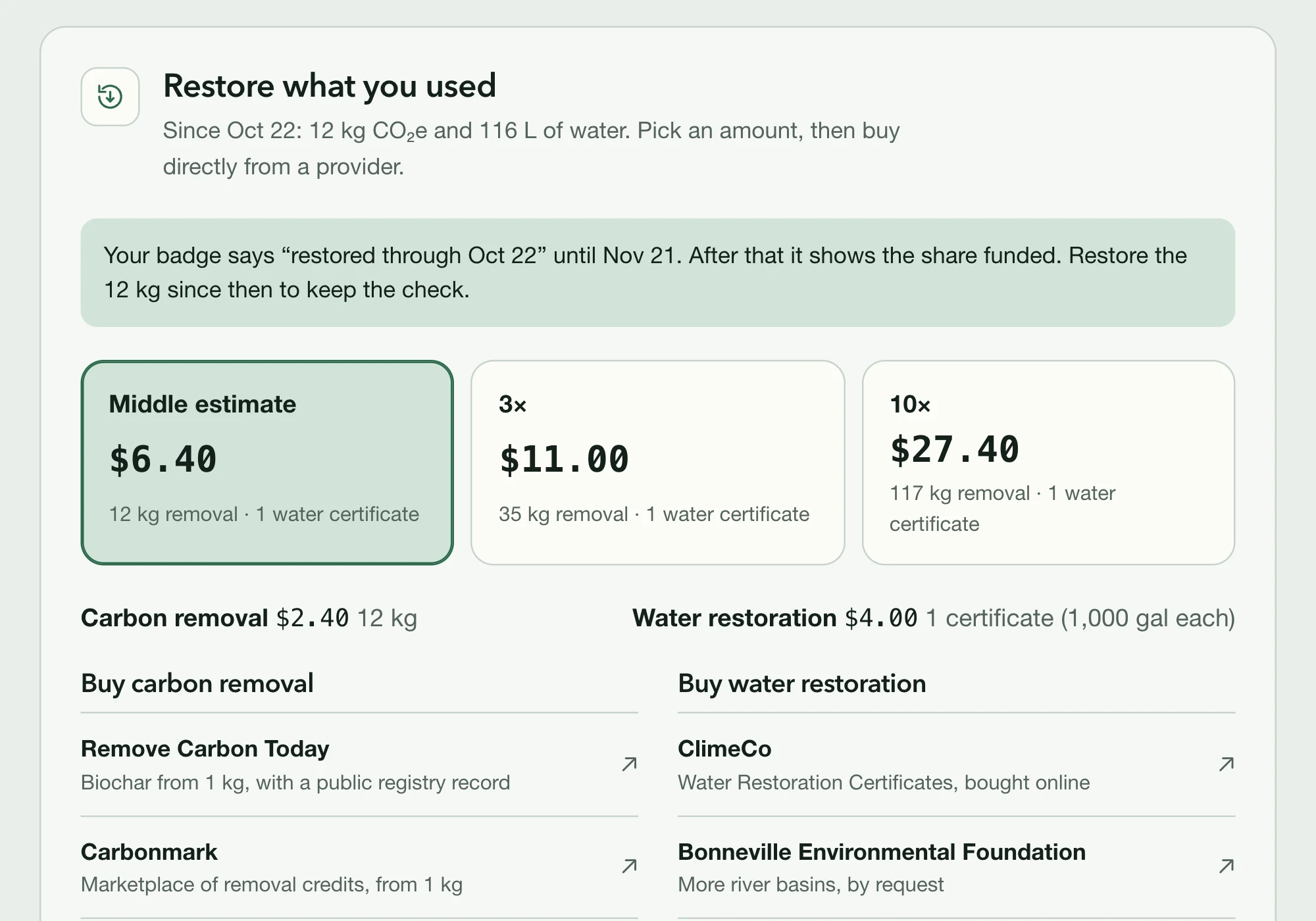
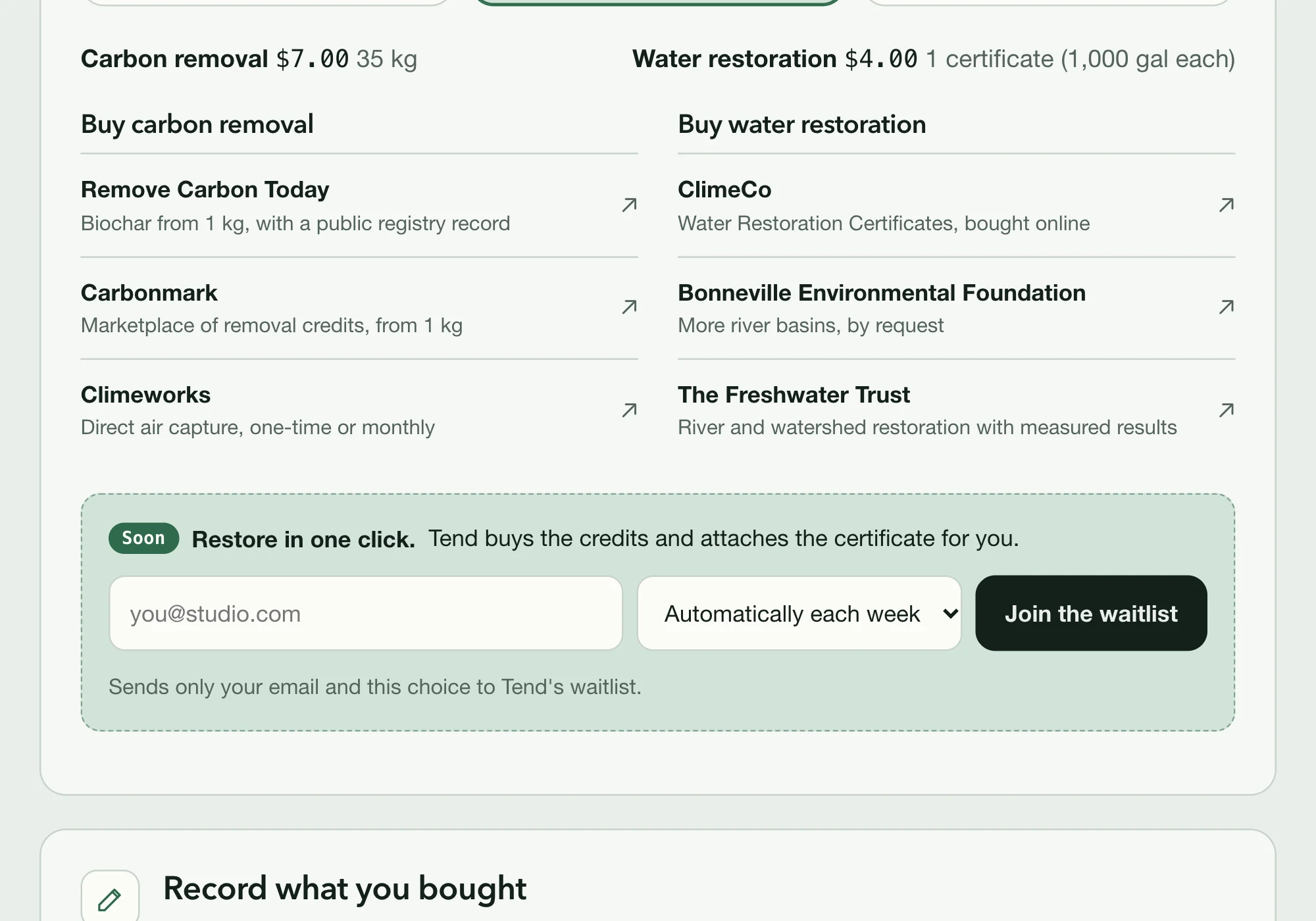
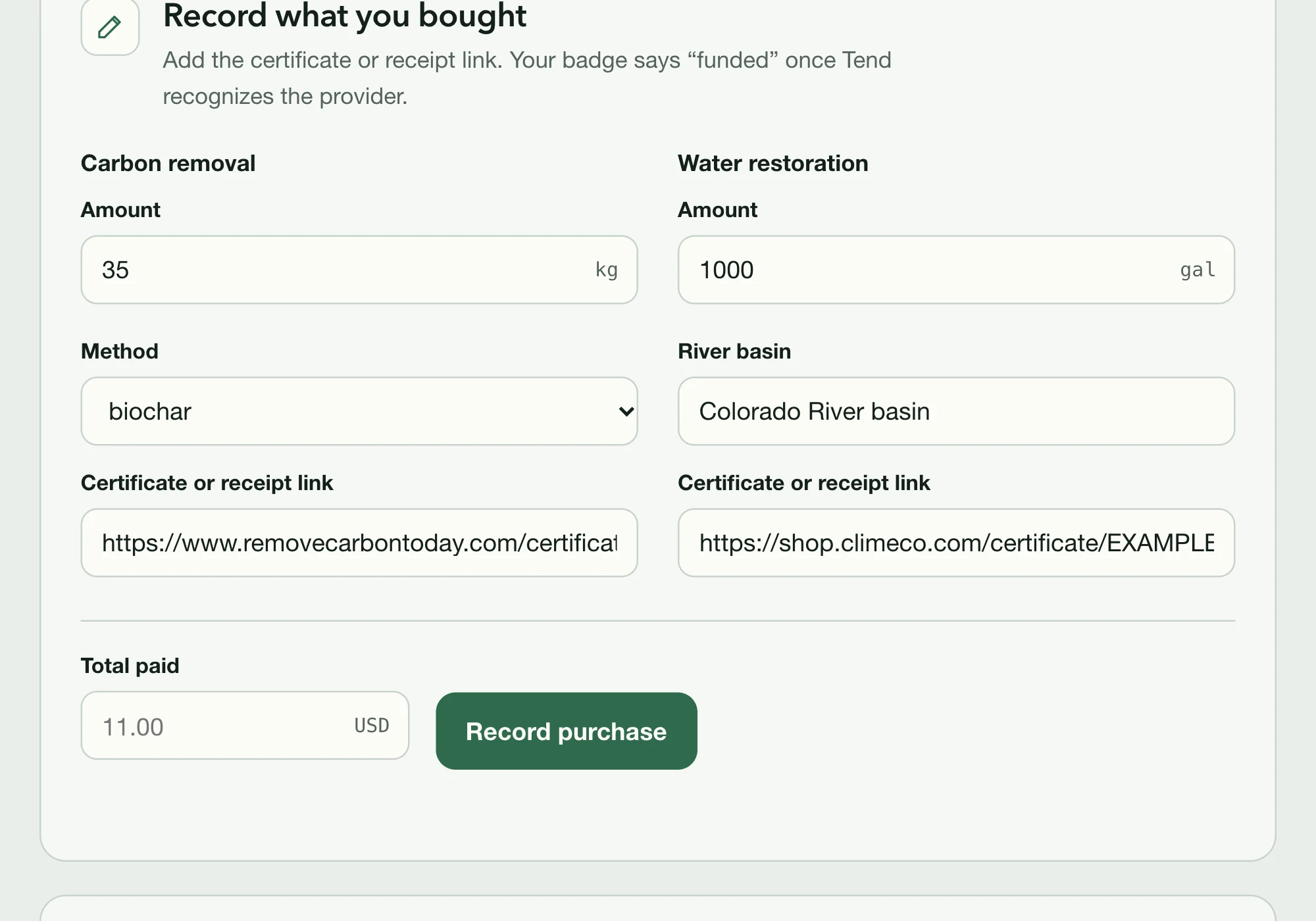
From a week of tokens to a badge
Click the window to go through it yourself.
TL;DR
An estimate of the energy, carbon, and water behind Claude Code usage, and a record of what you fund.
- Reads token counts, models, and timestamps on your computer, not your prompts or code.
- Shows low, middle, and high estimates, with the assumptions available to inspect.
- Suggests carbon removal and water restoration from the middle estimate. You buy directly from providers.
- Counts a purchase only with a receipt or certificate link from a recognized provider.
- Badges keep the estimate beside the project, like the one in this site’s footer.
Why I built it
I could see what I was spending in dollars. I wanted to see the rest.
I use Claude Code to build projects, including this portfolio. As I used it more, I wanted to understand what that activity meant in electricity, emissions, and water.
I couldn’t find a figure specific to my usage. Public research offered a starting point, but I couldn’t know much about the infrastructure behind each request.
I built Tend to make an estimate from the information available, show how it was calculated, and give me a way to act on it.
How it works
Start with the usage already recorded on your computer.
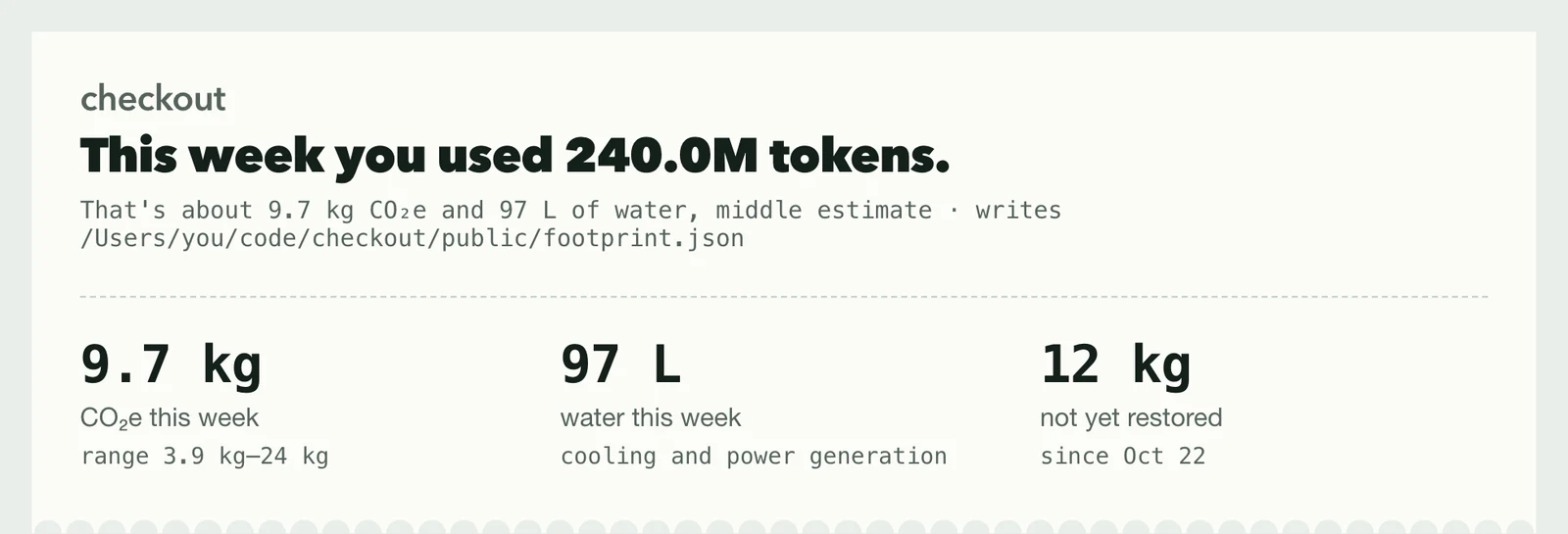
Claude Code keeps local usage records. Tend reads the token counts, model, and timestamps to organize activity by project.
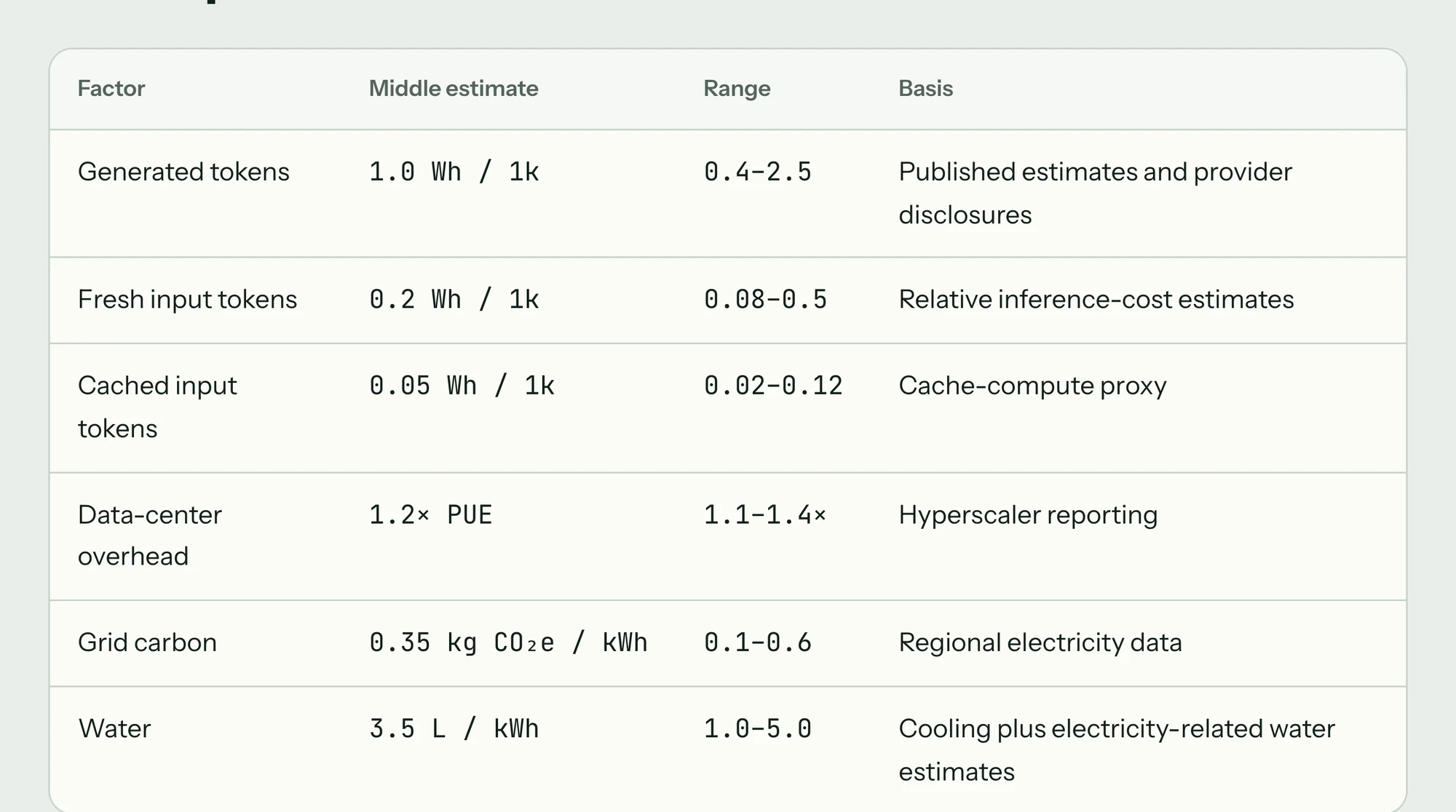
It uses those counts to estimate electricity use, then applies assumptions about carbon emissions and water use.
The dashboard shows project totals, the estimated range, and any carbon removal or water restoration you’ve recorded.
Tend runs locally without an account. It reads usage metadata rather than the contents of your prompts or code.
What I wrestled with
How do you make an uncertain number useful?
A single number is easy to understand, but it can suggest more certainty than the calculation supports.
I included low, middle, and high estimates, with the assumptions available to inspect. The middle estimate gives people a starting point for deciding what to fund. The range shows how much that figure could change.
I also kept the displayed numbers rounded. Extra decimal places wouldn’t make the underlying assumptions more reliable.
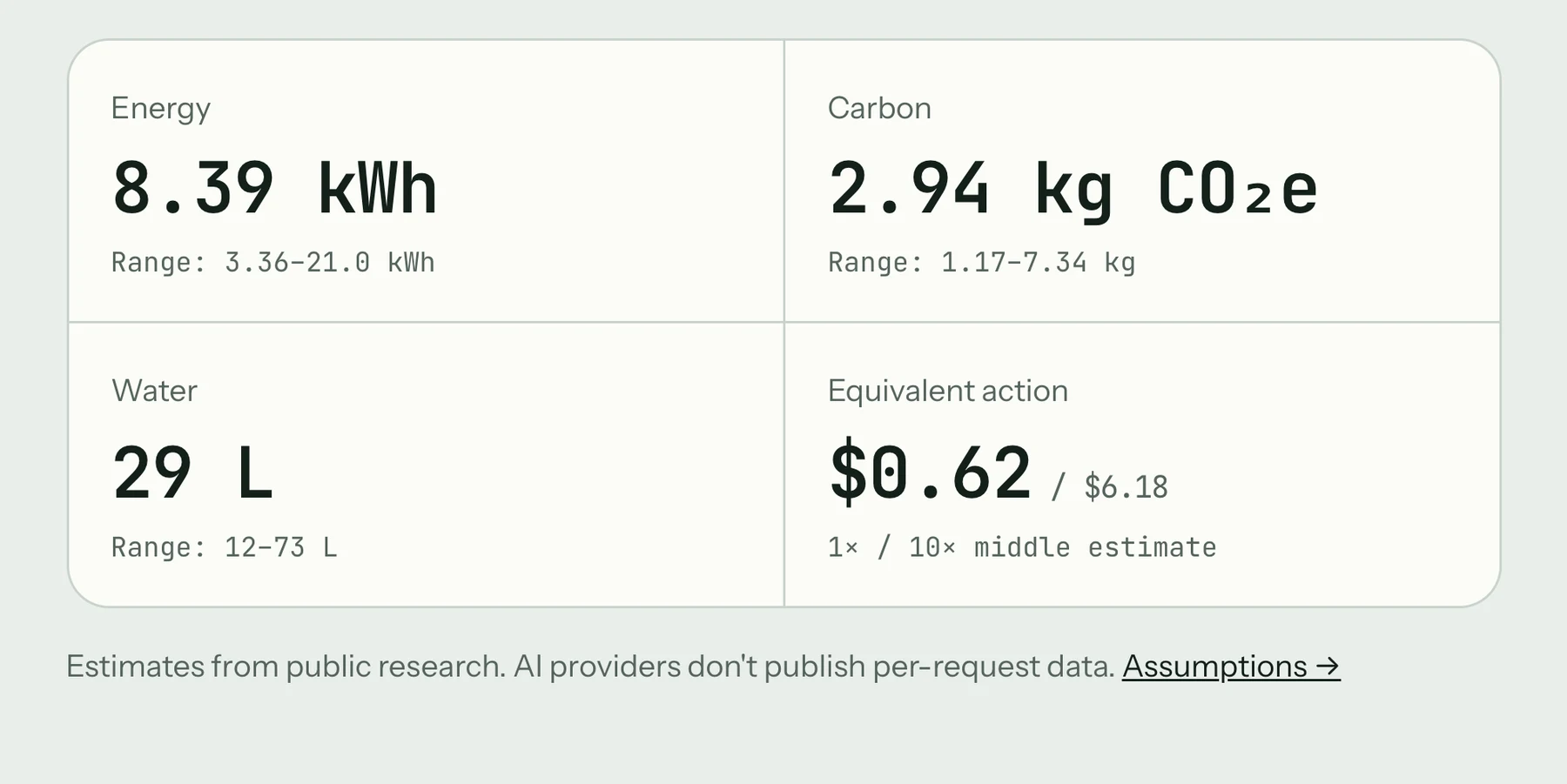
Every figure with its low-to-high range I wanted Tend to help people take action without suggesting that a purchase erases the resources used.
The tool separates the estimated footprint from the amount funded. It links people to providers directly and records their carbon removal and water restoration purchases afterward.
That distinction shaped the language throughout the product. “Estimated,” “funded,” and “restored” needed clear definitions wherever they appeared.
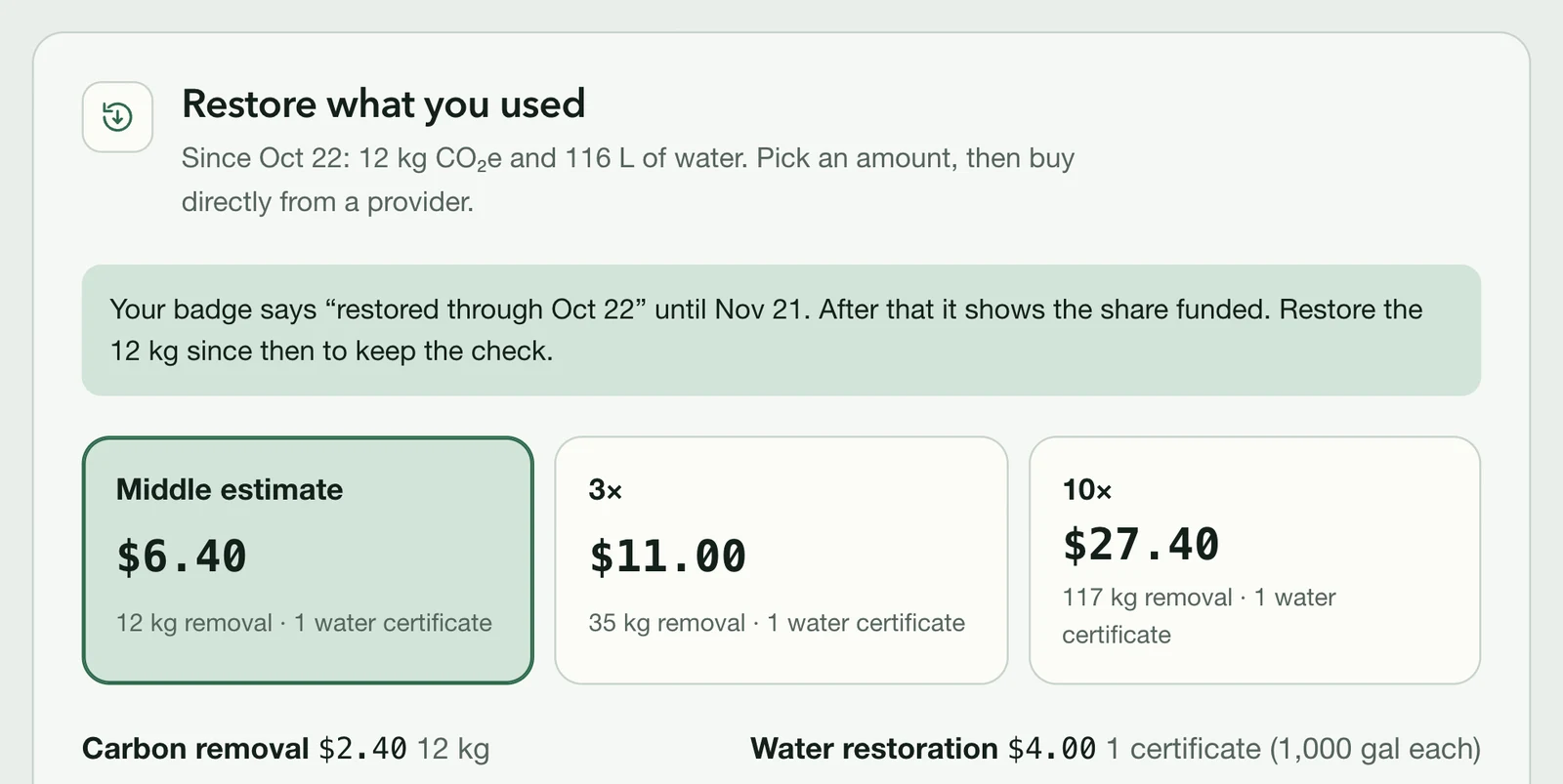
What to fund, kept apart from what was used A funding entry needs a receipt or certificate link from a recognized provider before Tend counts it toward its restoration status. Entries without a link remain marked “Needs proof.”
That creates a record someone can inspect. The link documents the purchase; it doesn’t make the original footprint estimate exact.
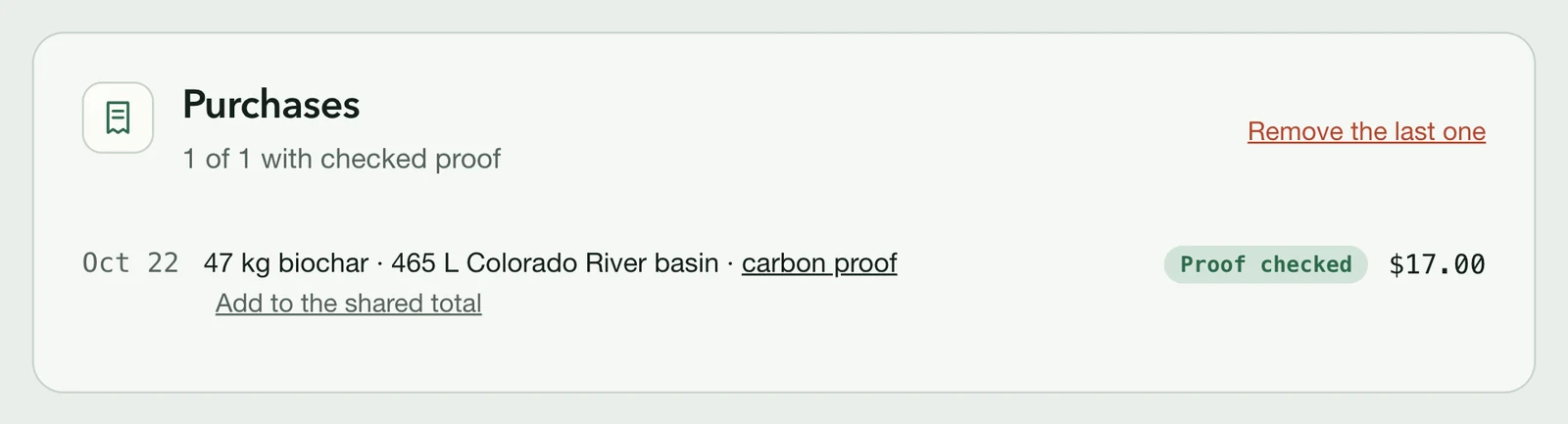
A purchase with its proof checked
Taking action
From an estimate to a record of what you funded.
Tend shows funding options based on the middle estimate, including multiples for people who want to contribute more.
You buy directly from carbon removal and water restoration providers, then add the amount and supporting link to Tend.
The record keeps three things together: what was estimated, what was funded, and the evidence attached to it.
Carbon removal and water restoration remain separate. Funding one doesn’t count toward the other.
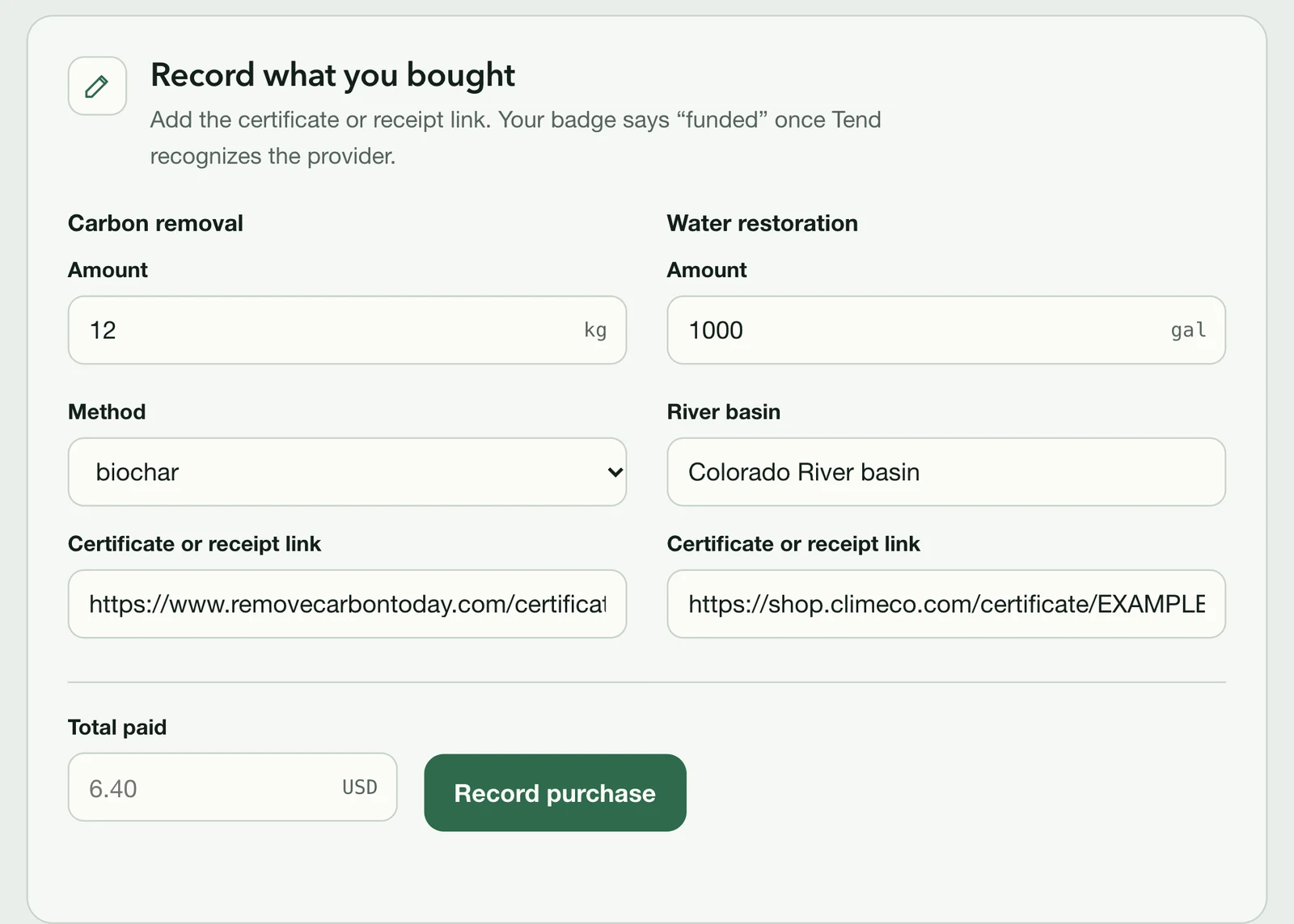
Sharing the record
Keep the estimate beside the project.
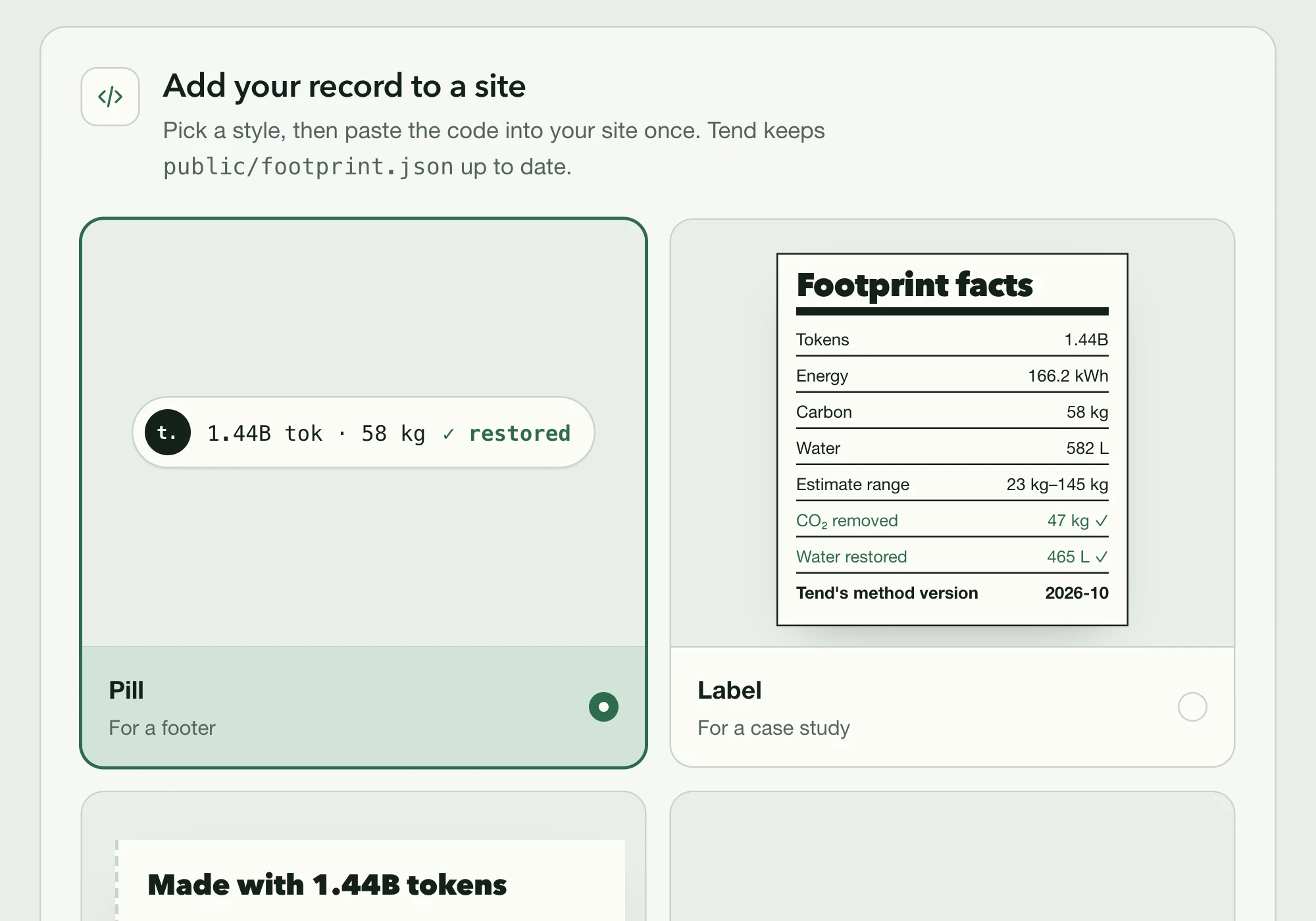
I designed badges for website footers, case studies, project credits, and GitHub READMEs.
The badge reads a footprint file generated for the project. It shows a compact summary, with dates and supporting details available for someone who wants to look further.
The badge on this portfolio refers to the Claude Code usage behind its development. It doesn’t represent every resource used to build or run the site.
Rendering, other tools, and hosting would need their own accounting.
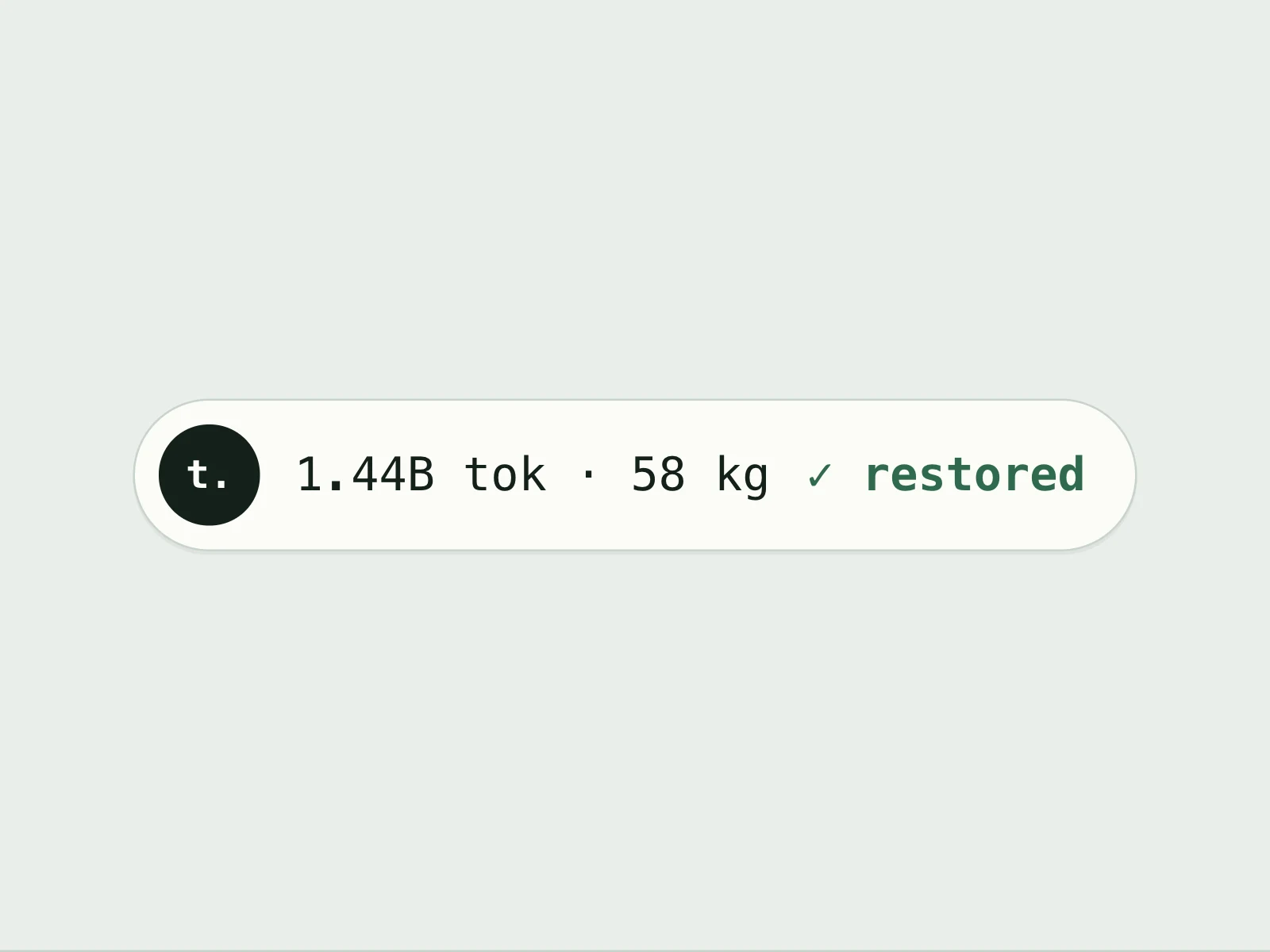 Pill · for a footer
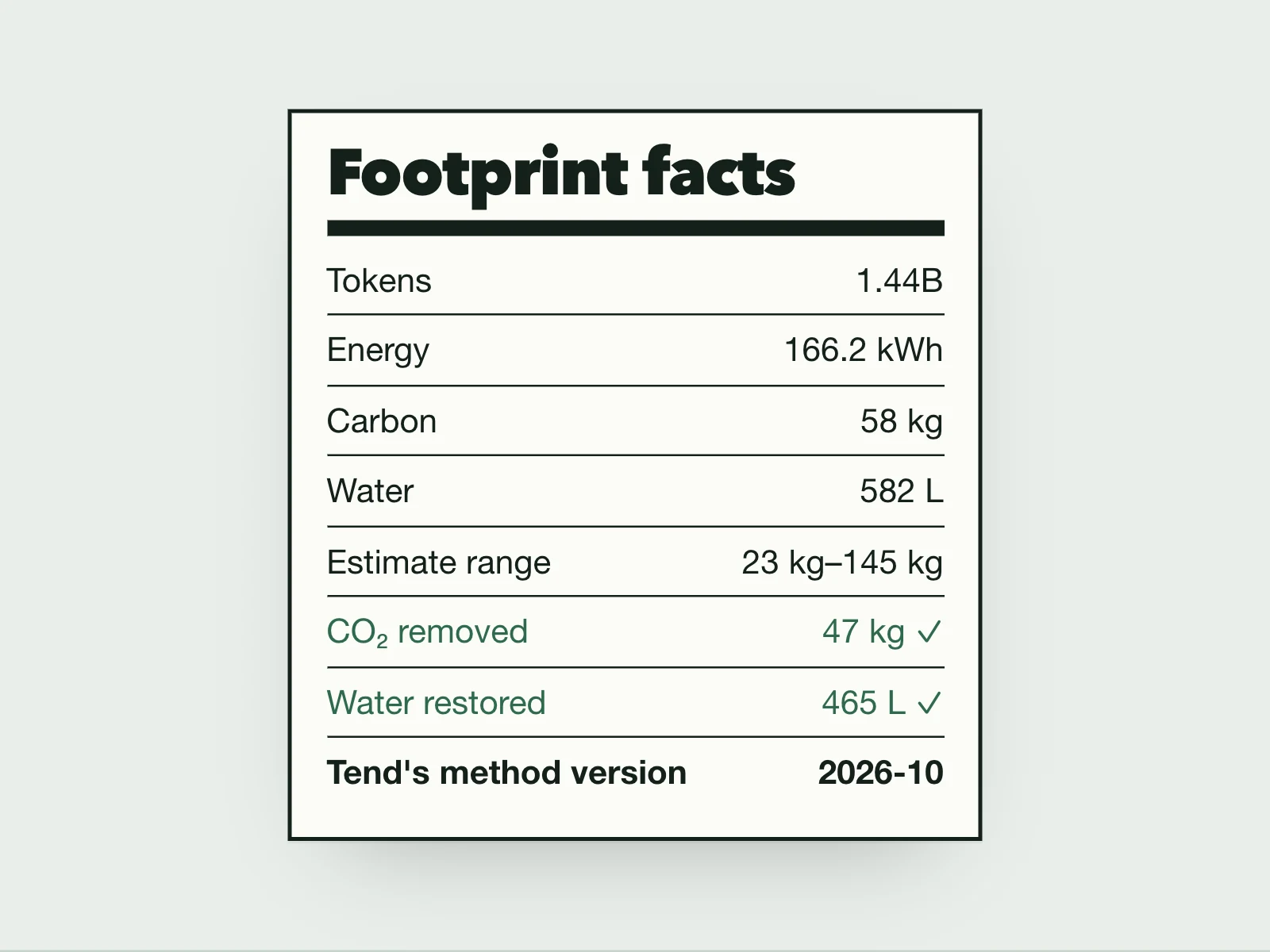 Label · for a case study
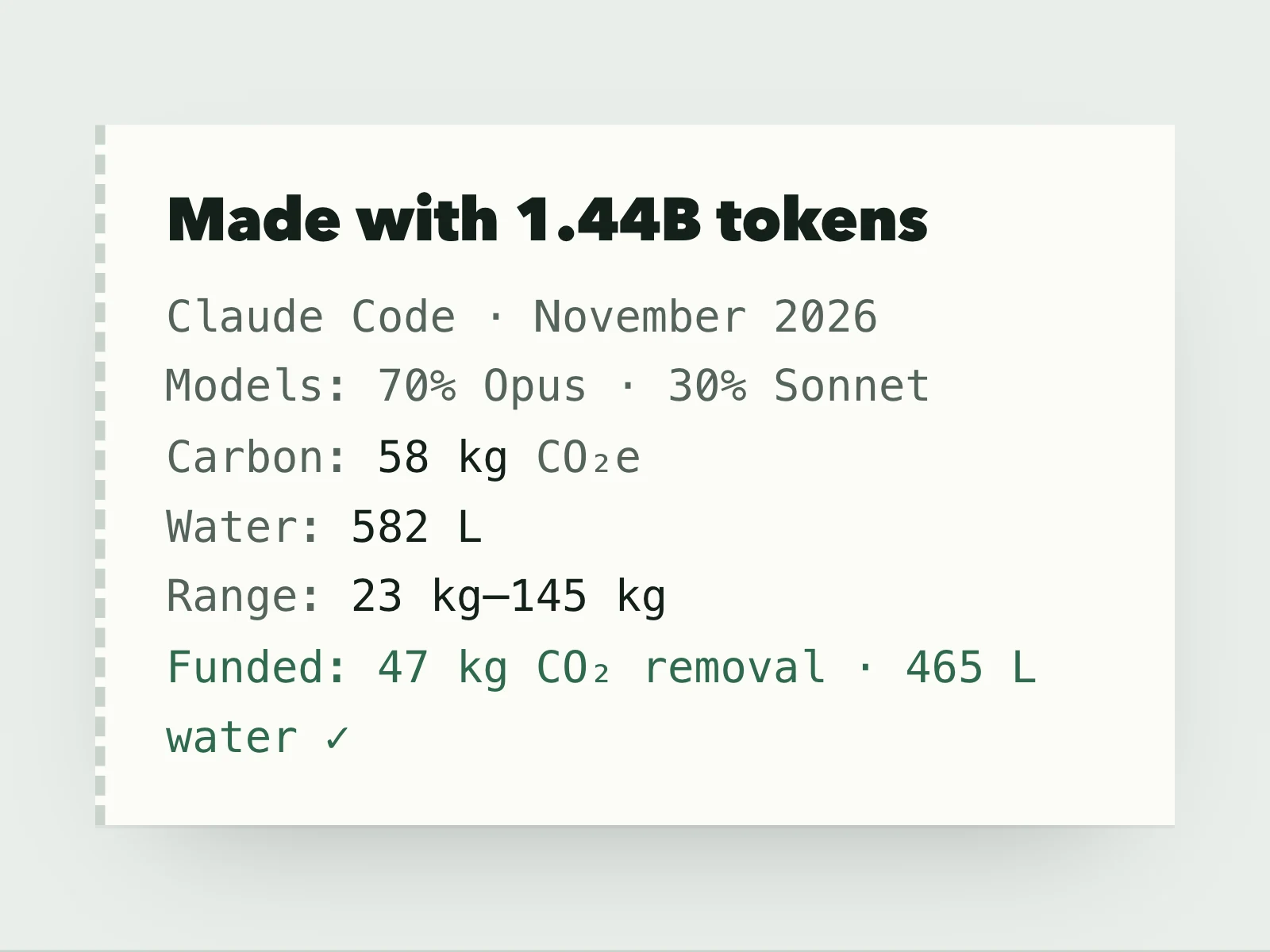 Stub · for project credits
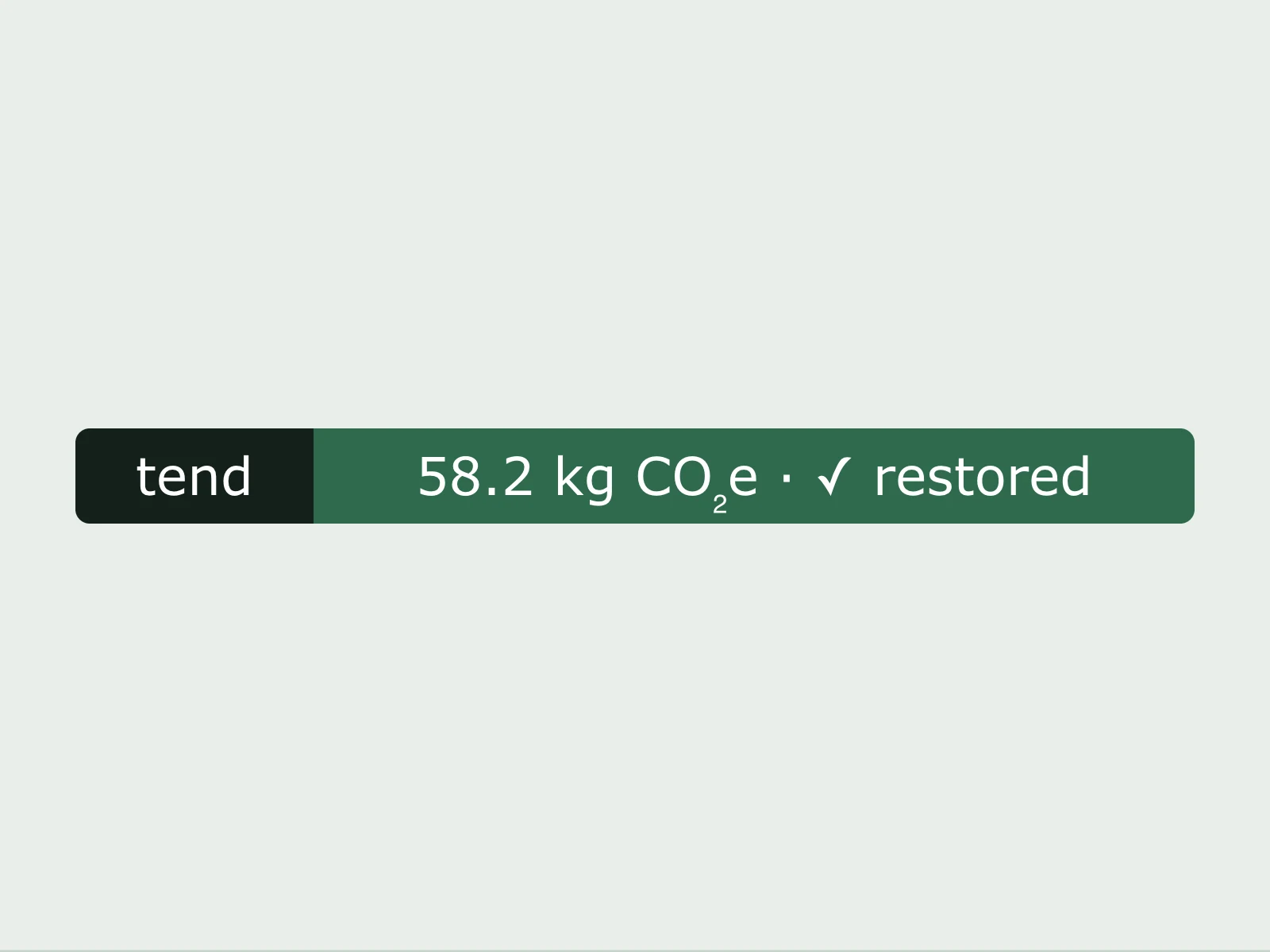 README · for GitHub
Where it is now
A working tool with room for better data.
Tend 1.0 is open source and free for individuals. It currently supports Claude Code.
I’m working toward support for Cursor, API usage, and Windows, and exploring what a version for teams would need.
The estimates can improve as better data becomes available. I’ve also included the methodology and a record of provider disclosures on Tend’s website, so people can examine the assumptions and see where information is missing.
A sample receipt: one team’s week of Claude Code use, by project
01 / 06Reflection
The numbers and the wording had to agree.
This project made me examine the claims a small interface can make.
A badge can look definitive even when the calculation behind it has a wide range. A word like “restored” can imply more than a receipt establishes. A total can be misunderstood if its scope isn’t visible.
I worked through those problems in the estimates, labels, funding records, and badge together.
I wanted something I could use in my own work: a way to see an estimated footprint, understand its limits, and keep a record of what I did in response.
Next independent project
Finjan
A coffee visit, across any distance.